Introduction
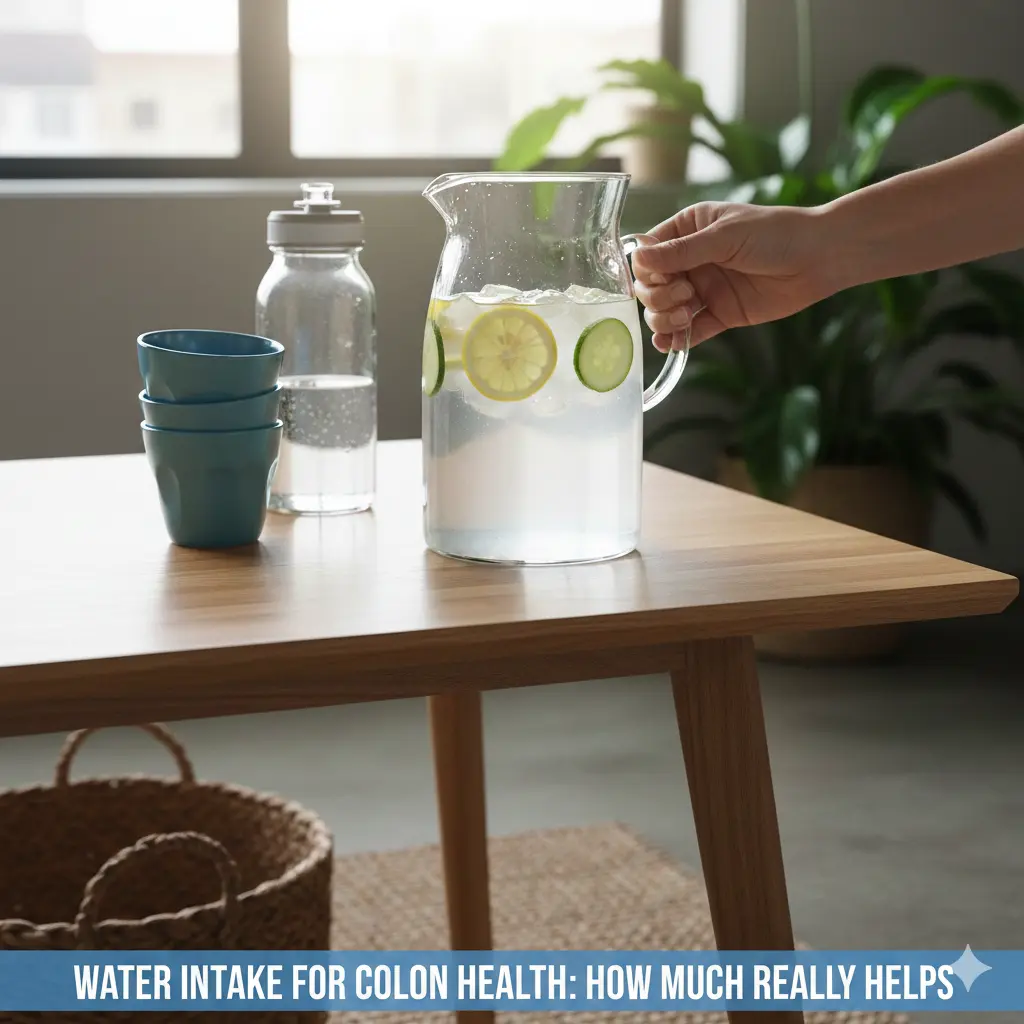
Water intake for colon health matters because the colon absorbs water from stool. Steady hydration keeps stool soft and moving, while inconsistent intake often leads to dryness, sluggish movement, and discomfort.
Most people know water is “important,” but few understand how hydration actually influences the colon. Many drink plenty of water yet still struggle with constipation or irregular bowel movements. The issue is rarely just how much water you drink—it’s when, how consistently, and how your daily routine supports hydration. This article explains how water intake affects colon health, common hydration mistakes, practical patterns that work, and how to hydrate in a way your colon can actually use.
How Water Works Inside the Colon (Plain Language)
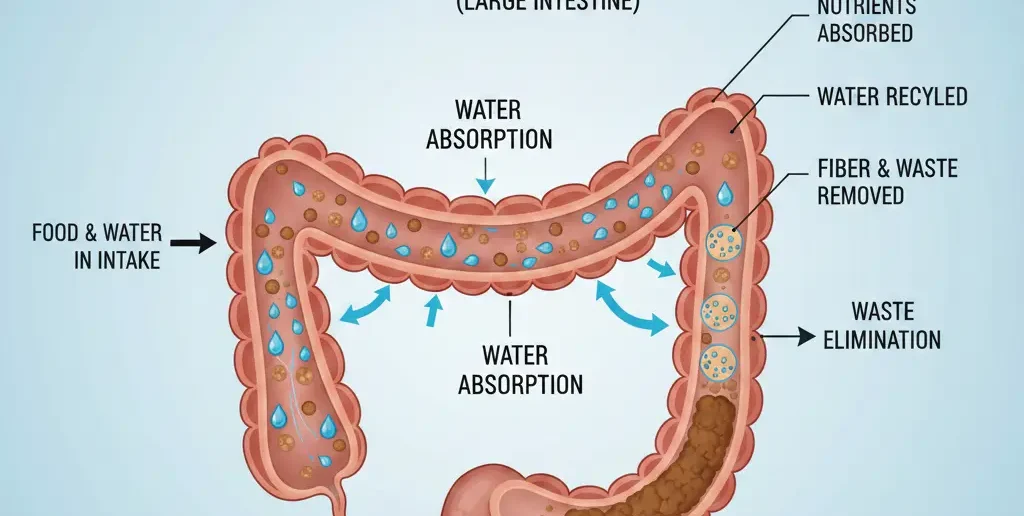
By the time food reaches the colon, digestion is mostly complete. The colon’s main job is to:
Absorb water
Compact waste
Move stool toward elimination
If the body senses dehydration, the colon pulls extra water out of stool, making it harder and slower to move.
From real-world observation, people with irregular hydration often have stools that look normal one day and dry or difficult the next—without dietary changes.
Why Hydration Matters More Than You Think
Hydration affects:
Stool softness
Ease of bowel movements
Colon muscle efficiency
Gas movement
Even mild dehydration over several days can quietly slow digestion.
SERP Gap: What Hydration Articles Usually Miss
Most pages say:
“Drink more water.”
What they don’t explain:
Why drinking large amounts at night doesn’t help much
Why hydration timing matters
Why some people drink plenty yet still feel constipated
Information Gain: Consistency Beats Volume
Here’s the insight missing from most top results:
The colon responds better to steady hydration throughout the day than to large, infrequent water intake.
Practical comparison:
| Hydration Pattern | Colon Response |
| Small amounts all day | Softer, consistent stool |
| Large amounts at night | Minimal stool benefit |
| Long gaps without water | Slower movement |
| Water only with meals | Inconsistent hydration |
This explains why “I drink a lot of water” doesn’t always translate to good colon health.
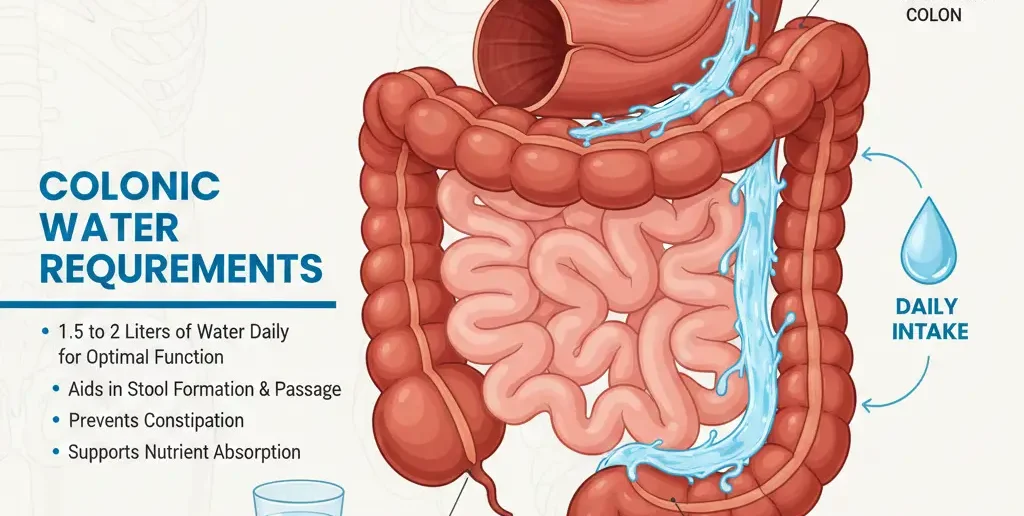
How Much Water Does the Colon Actually Need?
There’s no perfect number for everyone. Needs vary based on:
Body size
Activity level
Climate
Diet (fiber intake)
Caffeine use
In practical situations, signs of adequate hydration matter more than counting glasses:
Pale yellow urine
Comfortable bowel movements
Minimal straining
UNIQUE SECTION: Practical Insight From Experience
Why Constipation Persists Even When People “Drink Enough Water”
Many people hydrate mainly:
At night
During workouts only
When they feel thirsty
The colon benefits most when water intake:
Starts early in the day
Is spread evenly
Matches daily routine
Small shifts in timing often produce bigger results than increasing total volume.
Common Hydration Mistakes (and Fixes)
Mistake 1: Drinking Most Water Late at Night
Fix: Front-load hydration earlier in the day.
Mistake 2: Long Gaps Without Fluids
Fix: Sip water regularly, even when not thirsty.
Mistake 3: Relying on Caffeine for Fluids
Fix: Balance coffee or tea with plain water.
Mistake 4: Increasing Fiber Without Increasing Water
Fix: Pair fiber increases with extra hydration.
[Expert Warning]
Persistent constipation or bowel discomfort despite adequate hydration should be evaluated, especially if combined with pain, bleeding, or weight loss.
Practical Hydration Routine for Colon Health
| Time of Day | Hydration Habit | Why It Helps |
| Morning | Water on waking | Rehydrates stool |
| Mid-morning | Small refill | Maintains softness |
| Afternoon | Regular sips | Prevents drying |
| Evening | Moderate intake | Supports overnight movement |
| Night | Minimal | Avoids disruption |
[Pro-Tip]
If stools are hard in the morning, hydration the day before is usually the issue—not that morning’s water.
Relevant Table: Hydration Signals vs Colon Response
| Body Signal | What It Suggests |
| Dark urine | Low hydration |
| Hard stools | Water absorption increased |
| Straining | Stool too dry |
| Bloating | Slow movement |
| Comfortable stool | Adequate hydration |
FAQ
Q1. Does drinking more water improve colon health?
Yes, when intake is consistent throughout the day.
Q2. Can dehydration cause constipation?
Yes. The colon absorbs more water when dehydrated.
Q3. Is there a best time to drink water for digestion?
Earlier and evenly spaced intake works best.
Q4. Does coffee count toward hydration?
Partially, but it shouldn’t replace plain water.
Q5. Why are stools still hard if I drink water?
Timing, fiber balance, and routine matter.
Q6. Should I drink water at night for colon health?
Small amounts are fine; most hydration should be earlier.
NHS – water intake guidance
Conclusion
Water intake plays a quiet but powerful role in colon health. The goal isn’t forcing large volumes—it’s steady, well-timed hydration that supports stool movement throughout the day. When water intake aligns with daily routine, bowel movements become easier, discomfort decreases, and colon function stabilizes. Small consistency changes often deliver the biggest benefits.