Introduction:
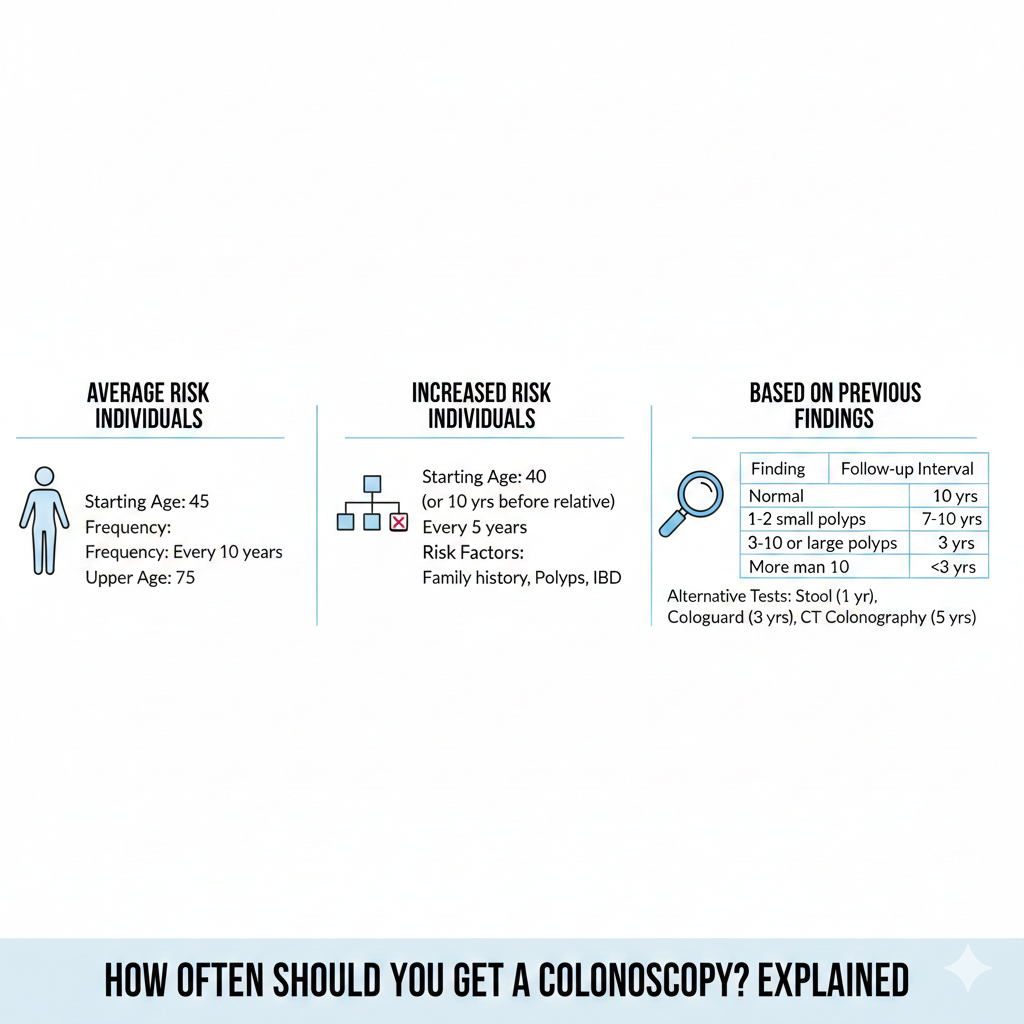
How often you should get a colonoscopy depends on risk level, age, and previous findings. For many average-risk adults, a normal colonoscopy means waiting several years, while higher-risk individuals need more frequent screening. Get a Colonoscopy
One of the most common questions people ask after a colonoscopy is, “When do I need this again?” Online answers often give rigid timelines without explaining why intervals differ. This article breaks down how colonoscopy timing really works, what changes the schedule, common misunderstandings, and how clinicians decide when repeating the test is necessary—without fear-based pressure.
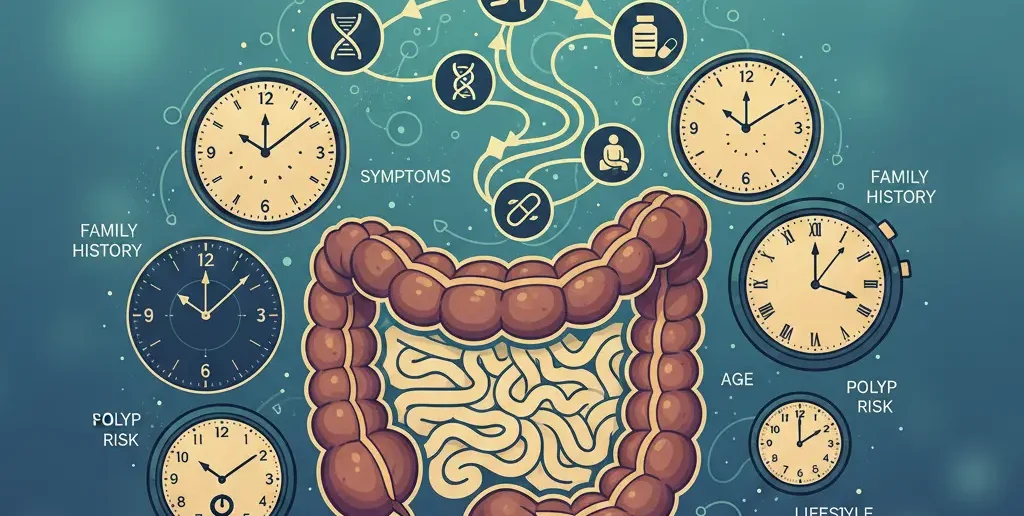
Why Colonoscopy Timing Is Not One-Size-Fits-All
Colonoscopy is both:
A diagnostic test
A preventive procedure
How often it’s repeated depends on:
What was found last time
Personal and family history
Age and overall risk profile
From real-world screening programs, most people with normal results do not need frequent repeat colonoscopies.
SERP Gap: What Most Articles Oversimplify
Many pages say:
“Get a colonoscopy every X years.”
What they don’t explain:
Why intervals change
Why some people wait longer
Why others need closer follow-up
This leads to unnecessary anxiety or false reassurance.
Information Gain: Colonoscopy Intervals Are Risk-Driven, Not Calendar-Driven
Here’s the key insight missing from many guides:
Colonoscopy schedules are based on risk and findings, not on arbitrary time rules.
The goal is maximum protection with minimum unnecessary procedures.
Typical Colonoscopy Intervals (General Guidance)
https://youtu.be/yNGuRtQ4Gcw
Average-Risk Adults With Normal Results
If no polyps or cancer are found:
Screening intervals are usually long
The colon lining stays stable for years
This long interval reflects strong preventive confidence, not neglect.
After Polyps Are Found
Follow-up timing depends on:
Number of polyps
Size
Type
Some polyps require:
Shorter follow-up intervals
More careful surveillance
Others do not significantly change timing.
Higher-Risk Individuals
More frequent colonoscopies may be recommended for people with:
Family history of colon cancer
Certain genetic conditions
Inflammatory bowel disease
Table: Colonoscopy Frequency by Risk Pattern
http://UCF5II_dHgVQZVhU69zdYgiQ
| Situation |
Typical Interval |
Why |
| Normal colonoscopy |
Several years |
Low risk |
| Small, low-risk polyps |
Shorter interval |
Monitor changes |
| Multiple or advanced polyps |
More frequent |
Higher risk |
| Family history |
Individualized |
Genetics |
| Prior cancer |
Close follow-up |
Prevention |
This mirrors real clinical practice—not blanket advice. Get a Colonoscopy
UNIQUE SECTION: Practical Insight From Experience
Why Many People Think They Need Colonoscopy Too Often
People often assume:
More testing = more safety
In reality:
Unnecessary procedures add risk
Over-screening doesn’t improve outcomes
In practical care, reassurance after a normal exam is intentional—not dismissive.
Common Mistakes People Make (and Better Choices)
Mistake 1: Assuming Annual Colonoscopy Is Safer
Fix: Follow risk-based intervals.
Mistake 2: Forgetting to Share Family History
Fix: Update doctors on relatives’ diagnoses.
Mistake 3: Skipping Screening After Long Gaps
Fix: Restart screening rather than avoiding it.
[Expert Warning]
New symptoms such as persistent bleeding, unexplained weight loss, or lasting bowel changes should be evaluated even if your last colonoscopy was normal.
How Doctors Decide When to Repeat Colonoscopy
Clinicians consider:
Previous findings
Time since last exam
New symptoms
Age and health status
The decision balances benefit vs burden—not fear.Get a Colonoscopy
[Pro-Tip]
If your last colonoscopy was normal, long intervals are a sign of success, not risk.
Embedded YouTube Video (Educational)
FAQ:
Q1. How often should an average-risk adult get a colonoscopy?
Usually after several years if the previous exam was normal.
Q2. Do polyps change colonoscopy timing?
Yes. Type and number of polyps matter.
Q3. Can I wait longer if I feel fine?
Yes, if risk is low and screening is up to date.
Q4. Does family history affect timing?
Yes. It often shortens intervals.
Q5. Should symptoms override screening schedules?
Yes. New symptoms should be evaluated promptly.
Q6. Is more frequent colonoscopy safer?
Not always. Risk-based timing is safest.
Conclusion:
How often you should get a colonoscopy depends on who you are, what was found, and how your risk profile looks—not on a fixed calendar. For many people, long intervals reflect effective prevention. For others, closer follow-up provides protection. Understanding this balance replaces fear with confidence and helps screening work the way it’s meant to.
Suggested embed:
🎥 https://youtu.be/3az7tlZxBy8
https://youtu.be/3az7tlZxBy8
Internal Links:
External link: