Introduction
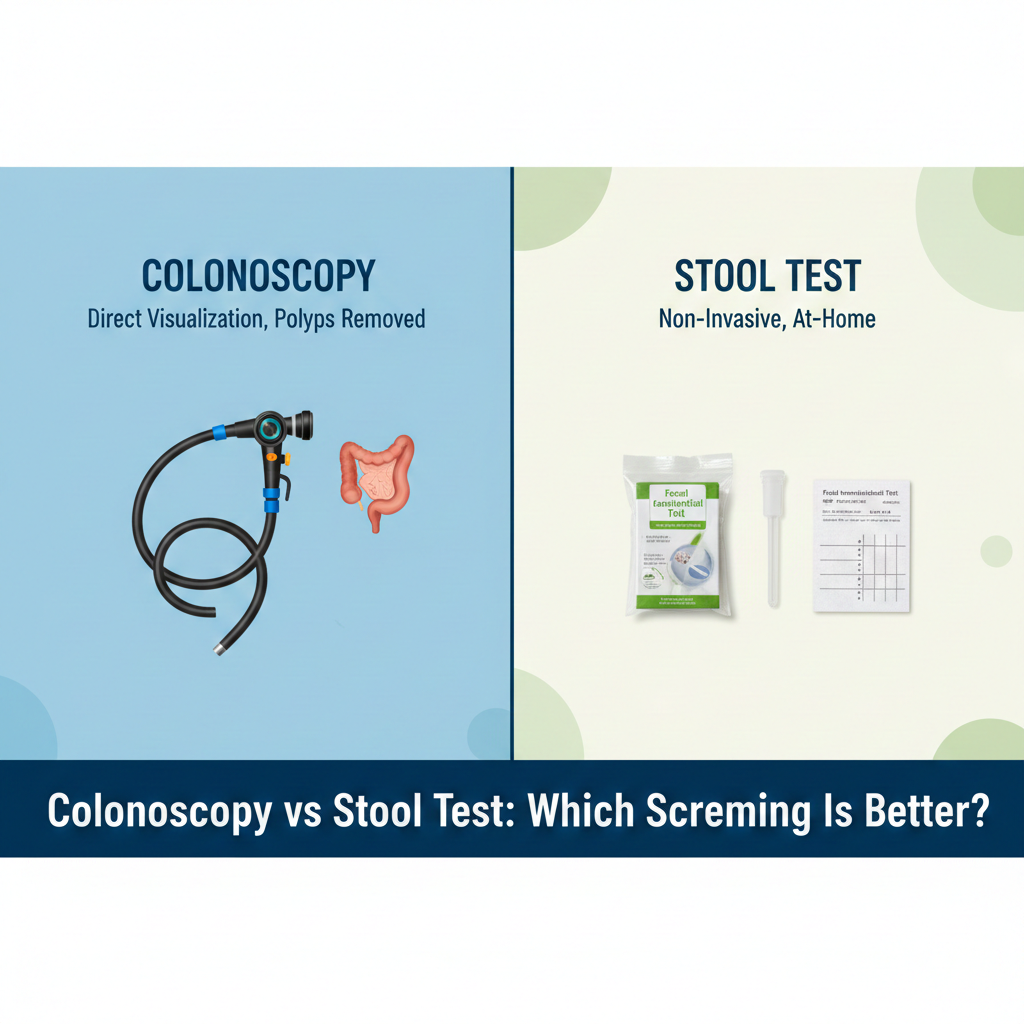
The difference between colonoscopy vs stool test comes down to purpose: stool tests detect signs of cancer, while colonoscopy can detect and prevent cancer by removing polyps. The right choice depends on risk, preference, and consistency.
Many people feel stuck choosing between colonoscopy and stool-based tests. Online advice often frames one as “best” and the other as “second-rate,” which isn’t how doctors actually think. In real screening programs, both options save lives when used correctly. This article explains how colonoscopy and stool tests differ, when each is recommended, common misconceptions, and how to choose without fear or pressure.
How Colonoscopy and Stool Tests Work (Plain Language)
Colonoscopy
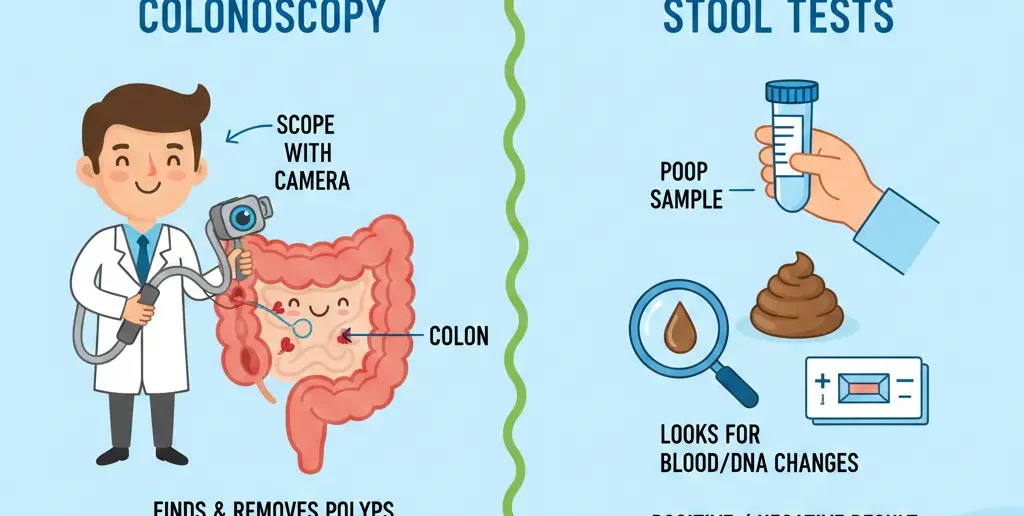
A colonoscopy is a visual exam where a doctor:
Looks directly at the colon lining
Finds polyps or cancer
Removes polyps during the same procedure
It’s both diagnostic and preventive.
Stool Tests
Stool tests analyze bowel samples for:
Hidden blood
Abnormal DNA shed by cancer or large polyps
They are non-invasive screening tools, not treatment.
SERP Gap: What Most Comparisons Get Wrong
Many articles compare tests as if accuracy alone decides everything. What they miss:
Screening works only if people actually do it
Prevention vs detection is a major distinction
Follow-up requirements matter
This article focuses on real-world decision-making, not marketing claims.
Information Gain: Screening Success Depends on Completion
Here’s the missing insight:
A “perfect” test that isn’t done is less effective than a “good” test done consistently.
In population screening programs, completion rates often matter more than theoretical accuracy.
Colonoscopy vs Stool Test — Side-by-Side Comparison
| Feature |
Colonoscopy |
Stool Test |
| Invasiveness |
Invasive |
Non-invasive |
| Detects cancer |
Yes |
Yes |
| Removes polyps |
Yes |
No |
| Cancer prevention |
Yes |
Indirect |
| Frequency |
Every ~10 years |
Yearly or every few years |
| Prep required |
Yes |
No |
| At-home option |
No |
Yes |
| Follow-up needed |
If abnormal |
Always if positive |
This table reflects how clinicians weigh options—not fear-based comparisons.
Who Typically Benefits More From Colonoscopy
https://youtu.be/l5fTNY349po
Colonoscopy is often favored when:
There’s higher risk (family history, prior polyps)
A stool test is positive
Someone wants the longest screening interval
There are concerning symptoms
From practical screening experience, people who want a “one-and-done” approach often prefer colonoscopy.
Who Stool Tests Often Fit Better
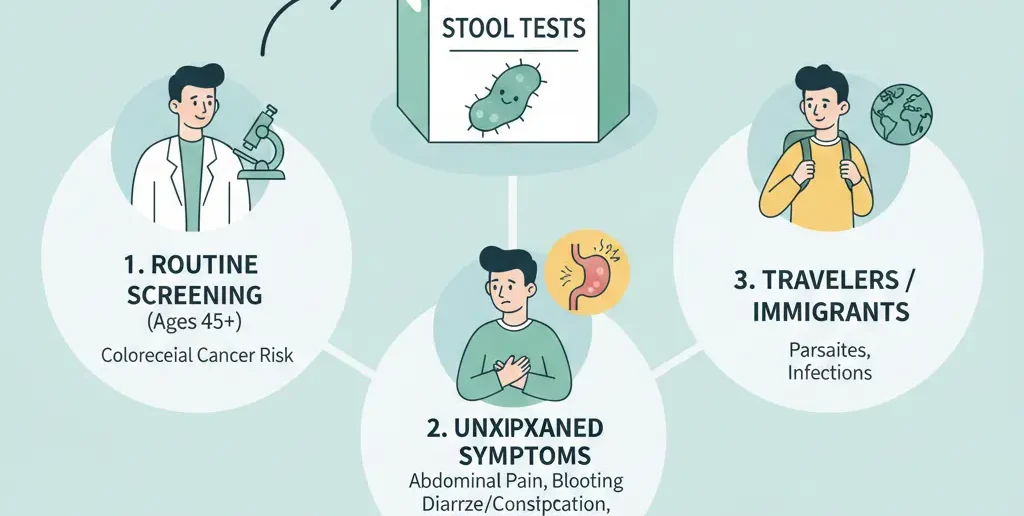
Stool tests are commonly chosen when:
Risk is average
People prefer at-home testing
Access to procedures is limited
Anxiety about invasive testing is high
Consistency is key—stool tests must be repeated on schedule.
UNIQUE SECTION: Myth vs Reality
Myth: Stool tests are inferior
Reality: They are effective screening tools when done regularly.
Myth: Colonoscopy is mandatory for everyone
Reality: Many average-risk adults screen safely with stool tests.
Myth: A negative stool test means “all clear” for years
Reality: Timing and repetition matter.
Common Mistakes People Make (and Smarter Choices)
Mistake 1: Choosing Based on Fear Alone
Fix: Consider risk level and willingness to repeat testing.
Mistake 2: Skipping Follow-Up After a Positive Stool Test
Fix: A positive result always needs colonoscopy.
Mistake 3: Delaying All Screening
Fix: Any screening on time is better than none.
[Expert Warning]
A positive stool test does not diagnose cancer—it signals the need for colonoscopy to find the cause.
How Doctors Help Patients Choose
Clinicians typically discuss:
Personal and family history
Prior screening results
Comfort with procedures
Ability to repeat testing reliably
There is no single “right” answer—only a right fit.
[Pro-Tip]
If you’re unlikely to repeat stool tests every year, colonoscopy may offer better long-term protection.
FAQ
Q1. Is colonoscopy more accurate than stool tests?
Colonoscopy directly visualizes the colon and removes polyps, but stool tests are effective when repeated regularly.
Q2. Can stool tests replace colonoscopy?
They can screen for cancer, but colonoscopy is needed if results are positive.
Q3. Which test prevents cancer?
Colonoscopy prevents cancer by removing polyps.
Q4. Are stool tests reliable?
Yes, for average-risk screening when used as directed.
Q5. What if I avoid screening altogether?
Delayed screening increases risk; any timely test is better than none.
Q6. Should I discuss options with my doctor?
Yes. Personal risk and preference guide the best choice.
Conclusion
Colonoscopy vs stool test isn’t about which test is “better”—it’s about which one you’ll complete consistently and correctly. Colonoscopy offers prevention in a single procedure, while stool tests provide accessible, at-home screening when repeated on schedule. When matched to risk, comfort, and follow-through, both approaches save lives. The best screening is the one you actually do.
INTERNAL LINK
Colonoscopy Preparation: A Clear, Step-by-Step Guide to a Successful Cleanout 2026
EXTERNAL LINK
Colorectal Cancer Guideline | How Often to Have Screening Tests | American Cancer Society