Introduction
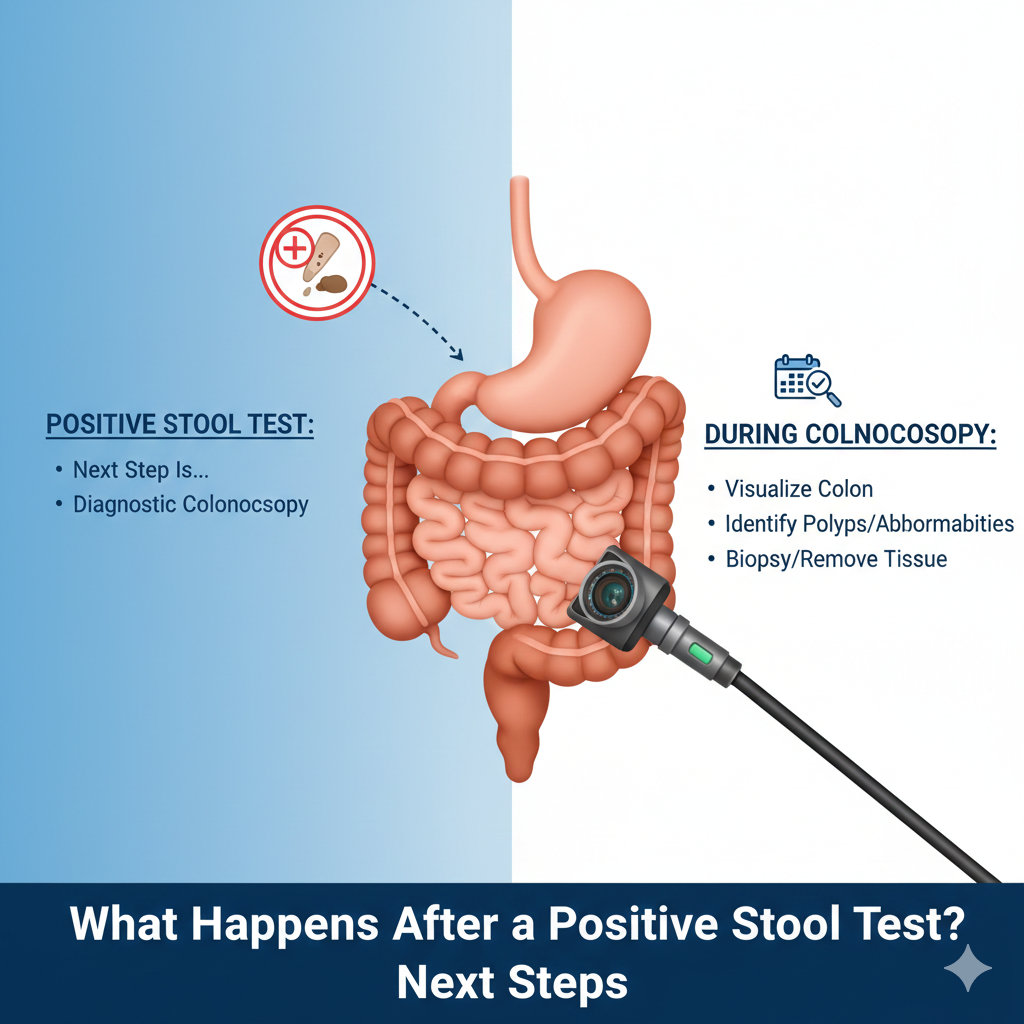
After a positive stool test, the next step is usually a colonoscopy to find the source of the result. A positive test does not mean cancer, but it does mean further evaluation is needed.
Getting a message that your stool test came back positive can trigger immediate fear. Many people assume the worst, even though most positive results are not cancer. The purpose of stool tests is to flag possibilities, not to diagnose disease. This article explains exactly what a positive stool test means, why false positives happen, what doctors do next, and how to approach follow-up calmly and confidently.
What a Positive Stool Test Actually Means
Stool tests look for signals, not diagnoses.
Depending on the test, a positive result may indicate:
Hidden blood in stool
Abnormal DNA fragments
Changes linked to polyps or inflammation
It does not tell:
Where the signal came from
Whether cancer is present
How serious the cause is
That’s why follow-up testing matters.
SERP Gap: What Most Pages Don’t Clarify
Many articles jump straight from:
“Positive test” → “Colonoscopy”
Without explaining:
Why stool tests are designed this way
How often positives are non-cancer
What doctors are actually looking for next
This lack of explanation fuels panic.
Information Gain: Stool Tests Are Sensitive on Purpose
Here’s the key insight missing from many guides:
Stool tests are designed to err on the side of caution, even if that means false positives.
Catching more potential issues early saves lives—even if some results turn out benign.
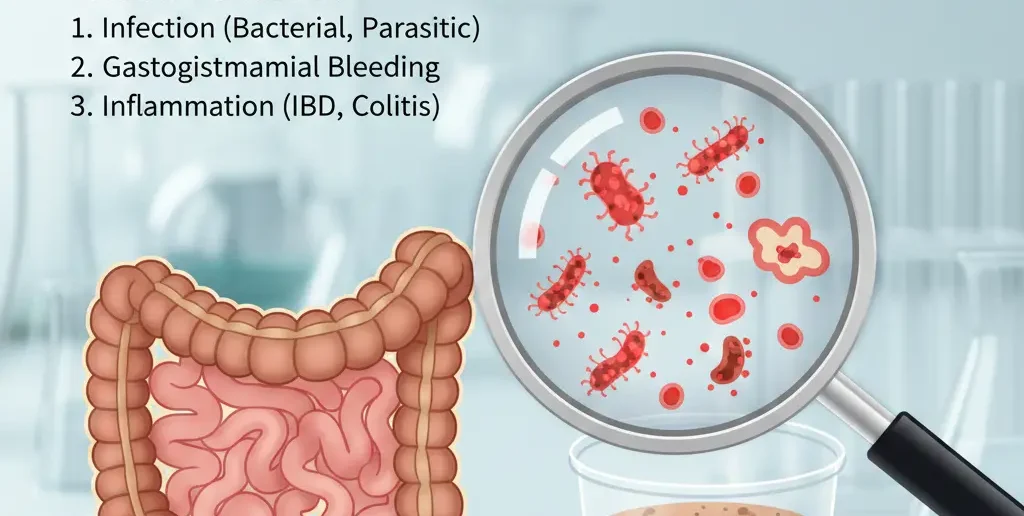
Common Reasons a Stool Test Is Positive
Benign Bleeding
Hemorrhoids
Anal fissures
Minor irritation
Colon Polyps
Some polyps bleed intermittently or shed DNA.
Inflammation or Infection
Temporary conditions can trigger abnormal results.
Cancer (Less Common)
Cancer is not the most frequent cause of a positive test—but it must be ruled out.
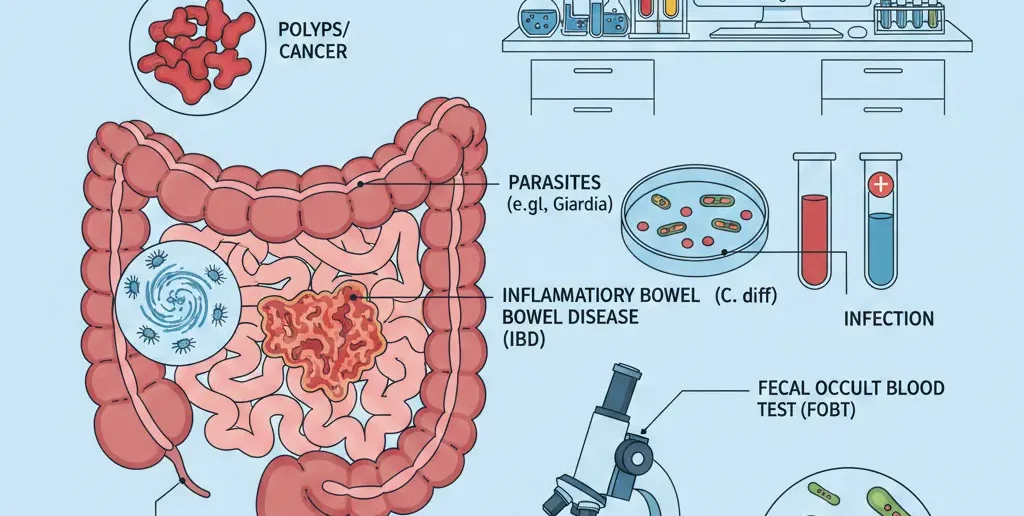
Table: Positive Stool Test Causes vs Likelihood
| Possible Cause | How Common | Serious? |
| Hemorrhoids | Very common | No |
| Anal fissures | Common | No |
| Polyps | Common | Preventable |
| Inflammation | Occasional | Treatable |
| Cancer | Less common | Needs treatment |
This reflects real screening data—not worst-case thinking.
What: Doctors Do After a Positive Stool Test
Step: Review the Test Type
Different stool tests detect different signals.
Step: Recommend Colonoscopy
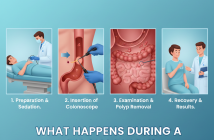
Colonoscopy allows doctors to:
See the entire colon
Identify the bleeding source
Remove polyps immediately
Step: Decide Next Steps Based on Findings
Most follow-ups end with:
Polyp removal
Reassurance
Routine surveillance
UNIQUE SECTION: Real-World Scenario
What Most People Hear After Follow-Up
In real screening programs, the most common outcomes after colonoscopy are:
“We removed a small polyp.”
“Everything looks normal.”
“Nothing concerning was found.”
Hearing “you’re fine” after a positive stool test is extremely common—and expected.
Common Mistakes People Make (and Smarter Responses)
Mistake 1: Assuming Positive = Cancer
Fix: Remember the test is a filter, not a diagnosis.
Mistake 2: Delaying Colonoscopy
Fix: Timely follow-up provides clarity and peace of mind.
Mistake 3: Repeating the Stool Test Instead
Fix: A second stool test does not replace colonoscopy.
[Expert Warning]
A positive stool test should never be ignored or repeated instead of followed up with appropriate diagnostic testing.
How Long Can You Safely Wait?
While this depends on individual risk:
Follow-up is usually recommended within weeks
Delays increase anxiety more than safety
Prompt evaluation often resolves uncertainty quickly.
[Pro-Tip]
Most people feel more relief after the follow-up test than they did while waiting—answers reduce fear.
Suggested embed:
“Positive Stool Test: What Happens Next?”
Placement: After “What Doctors Do After a Positive Stool Test”
FAQ
Q1. Does a positive stool test mean cancer?
No. Most positive results are caused by non-cancerous conditions.
Q2. Why is colonoscopy needed after a positive test?
To identify and treat the source of the signal.
Q3. Can hemorrhoids cause a positive result?
Yes. They are a common cause.
Q4. Should I repeat the stool test instead?
No. Follow-up testing is required.
Q5. How soon should I get a colonoscopy?
Usually within a few weeks, depending on risk.
Q6. What happens if the colonoscopy is normal?
You return to routine screening or follow a new schedule.
Conclusion
A positive stool test is not a diagnosis—it’s a signal to look closer. Most follow-ups reveal benign causes or removable polyps, not cancer. Understanding why the test flagged something and what comes next turns fear into clarity. When followed up promptly, stool testing becomes one of the most effective tools in preventing serious disease.
Internal Links
External LINK
Colorectal Cancer Guideline | How Often to Have Screening Tests | American Cancer Society