Introduction
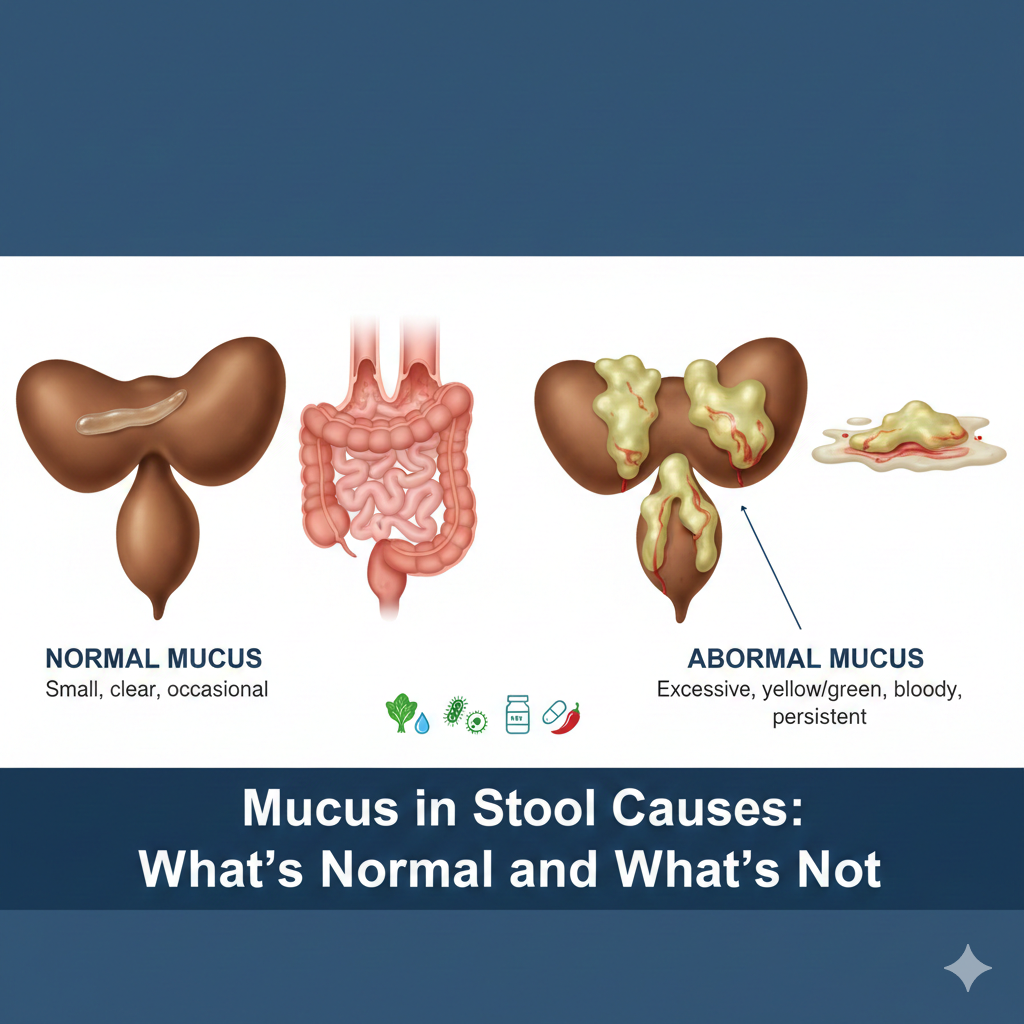
Mucus in stool is often normal and linked to digestion or mild irritation, not disease. What matters is how often it appears, how much there is, and what symptoms come with it.
Seeing mucus in stool can be unsettling, especially if it appears suddenly or repeatedly. Many online explanations jump straight to serious conditions without explaining why the colon produces mucus in the first place—or how common it actually is. This article explains mucus in stool in a grounded, experience-based way: why it happens, when it’s usually harmless, common mistakes people make when interpreting it, and how to tell when it deserves medical attention.
Why the Colon Produces Mucus (Normal Function Explained)
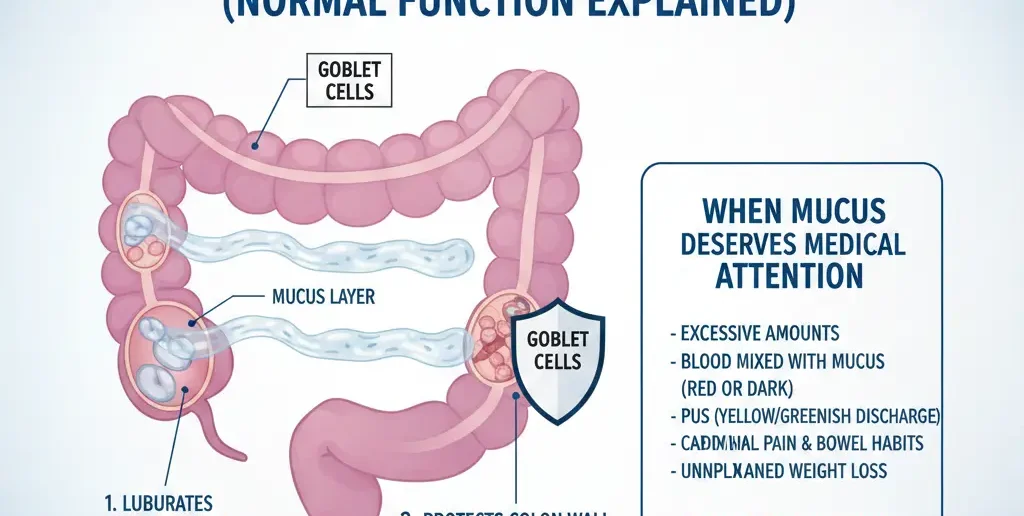
Mucus isn’t waste—it’s protection.
The colon produces mucus to:
Lubricate stool
Protect the intestinal lining
Reduce friction during bowel movements
In small amounts, mucus is always present, but it often goes unnoticed because it mixes with stool.
From practical experience, most people only notice mucus when stool consistency changes or bowel movements slow down—making the mucus more visible.
When Mucus in Stool Is Usually Normal
Occasional mucus is common, especially when linked to:
1) Mild Constipation
Hard or slow-moving stool stimulates extra lubrication.
2) Temporary Digestive Upset
After:
Diet changes
Travel
Dehydration
Short-term stress
3) Irritable Bowel Sensitivity
The colon may overproduce mucus as a protective response.
4) Minor Rectal Irritation
Straining or frequent wiping can increase visible mucus.
SERP Gap: What Most Articles Don’t Explain Clearly
Many top-ranking pages say “mucus can be normal or serious” but fail to explain:
How much mucus matters
Why frequency is more important than a single sighting
Why color alone is often misleading
This lack of nuance causes unnecessary fear.
Information Gain: Frequency and Pattern Matter More Than Presence
Here’s the key insight missing from most results:
Seeing mucus once is rarely meaningful. Seeing it consistently with other changes is what shifts concern.
Practical interpretation table:
| Observation Pattern | What It Often Suggests |
| Small amount, occasional | Normal lubrication |
| Appears during constipation | Protective response |
| Repeated daily for weeks | Ongoing irritation |
| With pain, bleeding, weight loss | Needs evaluation |
| Clears when routine improves | Functional issue |
This pattern-based approach mirrors how clinicians think—but is rarely explained online.
UNIQUE SECTION: Myth vs Reality
Myth: Any Mucus in Stool Means Infection or Disease
Reality: Small amounts are normal and often go unnoticed.
Myth: Clear mucus is always harmless, colored mucus is dangerous
Reality: Color varies with hydration, stool speed, and irritation.
Myth: Mucus means you need medication

Reality: Many cases resolve by fixing routine and hydration.
Common Causes of Mucus in Stool (Ranked by Likelihood)
1) Constipation or Slow Transit
Hard stool irritates the colon lining, triggering extra mucus.
2) Stress-Related Gut Response
The colon reacts to stress by increasing protective secretions.
3) Food Sensitivity or Sudden Diet Changes
Rapid fiber increases or food timing shifts can irritate the lining.
4) Minor Inflammation or Infection (Less Common)
Usually accompanied by:
Pain
Fever
Frequent diarrhea
Common Mistakes People Make (and How to Fix Them)
Mistake 1: Judging Based on One Bowel Movement
Fix: Look for repetition over 7–10 days.
Mistake 2: Focusing Only on Color
Fix: Pay attention to frequency, comfort, and other symptoms.
Mistake 3: Making Drastic Diet Changes Immediately
Fix: Adjust gradually and observe changes calmly.
[Expert Warning]
Mucus in stool with blood, persistent pain, unexplained weight loss, or nighttime symptoms should always be discussed with a healthcare professional.
Practical Steps That Often Reduce Mucus
Increase water intake steadily
Respond to bowel urges promptly
Avoid sudden fiber overload
Maintain regular meal timing
From real usage patterns, mucus often decreases once stool movement becomes smoother.
[Pro-Tip]
If mucus appears mainly during constipation, focus on hydration and timing before eliminating foods.
Relevant Table: Mucus Appearance vs Context
| Context | Likely Meaning |
| Clear, small amount | Normal lubrication |
| With hard stool | Constipation response |
| With urgency & cramps | Irritation or sensitivity |
| With bleeding | Needs evaluation |
| Improves with routine | Functional cause |
FAQ
Q1. Is mucus in stool normal?
Yes, small amounts are normal and often unnoticed.
Q2. How much mucus is too much?
Frequent or increasing mucus over weeks is more relevant than a single episode.
Q3. Can stress cause mucus in stool?
Yes. Stress often increases protective mucus production.
Q4. Does mucus always mean infection?
No. Infection usually comes with pain, fever, or diarrhea.
Q5. Should I change my diet immediately?
Gradual changes are better than sudden restrictions.
Q6. When should I see a doctor?
If mucus appears with bleeding, pain, or weight loss.
Conclusion
Mucus in stool is usually a protective response, not a warning sign. Understanding frequency, patterns, and accompanying symptoms prevents unnecessary fear and overreaction. Most cases improve with routine adjustments and hydration. When mucus persists or combines with warning signs, medical guidance is the right next step—but context always comes first.
Internal Links
Change in Bowel Habits: What It Means When It Lasts Wee 2026