Introduction
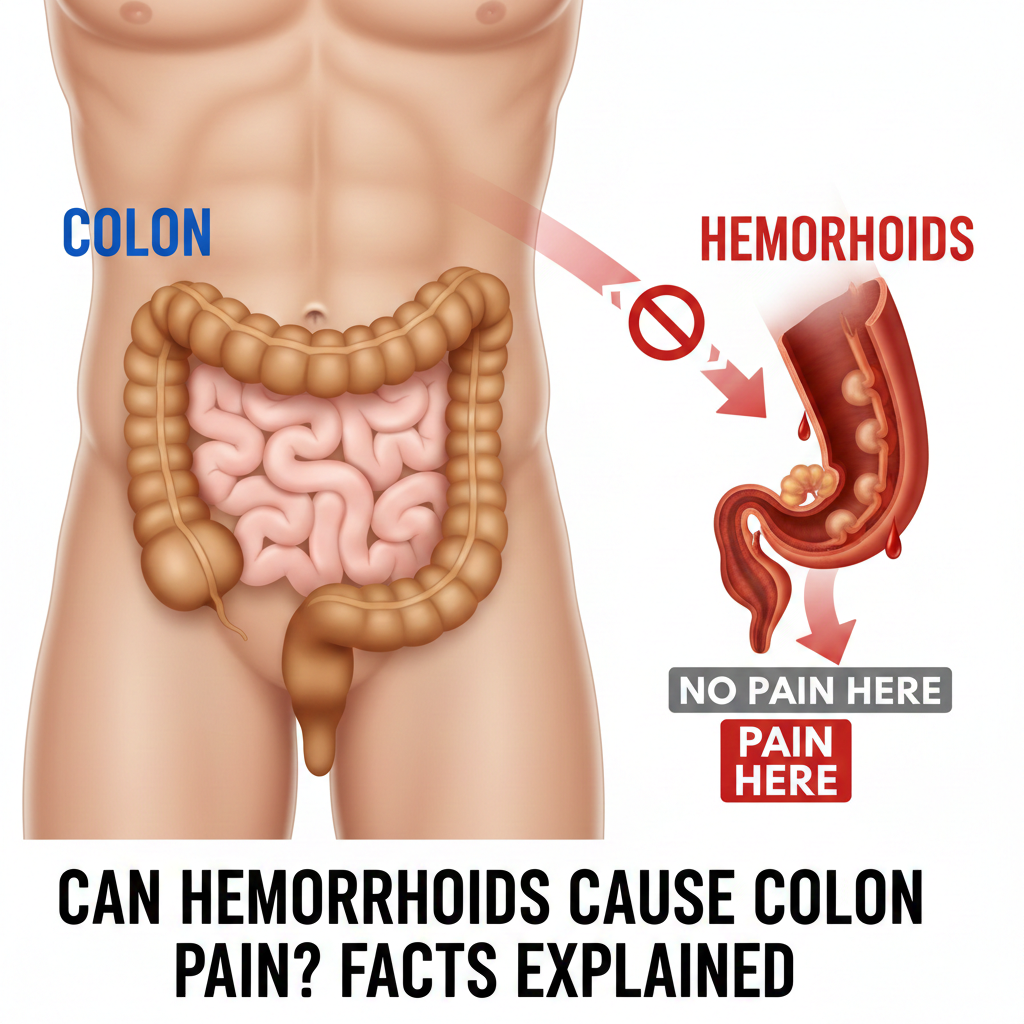
Hemorrhoids do not usually cause colon pain, because they form near the rectum, not deep in the colon. However, discomfort from hemorrhoids can be mistaken for colon pain due to pressure, muscle tension, or straining.
This confusion is extremely common. People feel pain or pressure during bowel movements and assume the entire colon is involved. Online explanations often blur the difference between rectal conditions and colon problems, which increases anxiety and misinterpretation. This article clearly explains where hemorrhoid pain originates, why it’s often confused with colon pain, how to tell the difference, and when symptoms deserve further evaluation.
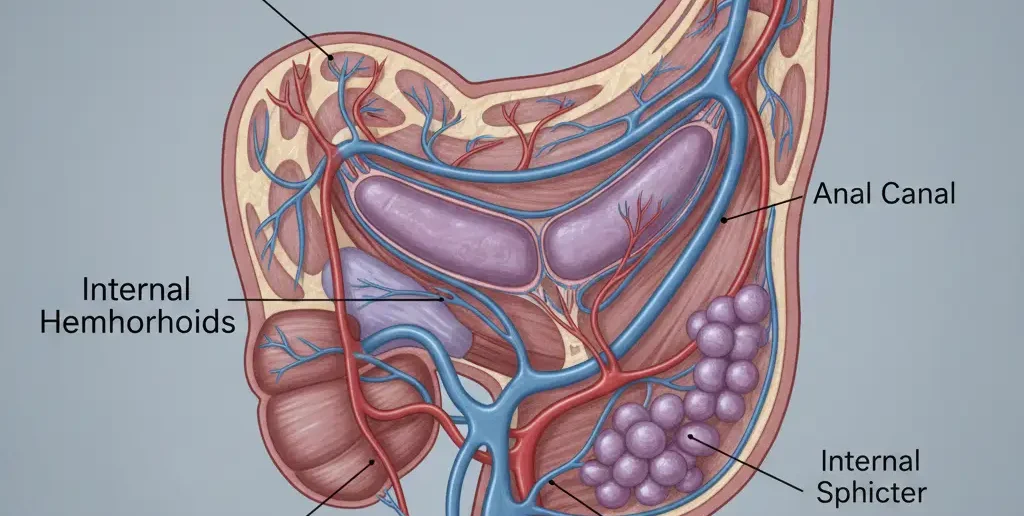
Where Hemorrhoids Actually Form
Hemorrhoids are swollen veins located:
In the rectum (internal hemorrhoids)
Around the anus (external hemorrhoids)
They form at the very end of the digestive tract, not in the colon itself.
Key distinction
Colon pain → usually felt deeper in the abdomen
Hemorrhoid pain → felt at or near the rectum/anus
Understanding location is critical for accurate interpretation.
Why Hemorrhoid Pain Feels Like Colon Pain
Even though hemorrhoids don’t form in the colon, they can create sensations that feel higher up.
Common reasons for confusion.
Referred Pressure
Straining during bowel movements increases pressure throughout the lower digestive tract, which can create a sensation of discomfort that feels “internal.”
Muscle Tightening
Pain near the rectum often causes nearby muscles to tighten, creating a dull ache that can radiate upward.
Constipation-Related Discomfort
Constipation commonly causes both:
Hemorrhoids
Colon pressure
This overlap makes it feel like one condition is causing the other.
From practical experience, people often report “colon pain” that disappears once hemorrhoid irritation and straining improve.
SERP Gap: What Most Articles Don’t Explain
Most pages say:
“Hemorrhoids don’t cause colon pain.”
But they don’t explain why people feel pain anyway.
The missing explanation is mechanical pressure and muscle response, not disease spread.
Information Gain: Location Matters More Than Sensation
Here’s the key insight missing from many top results:
Pain location is more reliable than pain intensity when distinguishing hemorrhoids from colon problems.
Practical comparison table
| Feature | Hemorrhoid-Related Pain | Colon Pain |
| Location | Rectal/anus area | Abdomen |
| Trigger | Bowel movements | Meals, gas, movement |
| Relief | After passing stool | After bowel movement or gas |
| Bleeding | Bright red, on tissue | Mixed with stool |
| Progression | Improves with care | May worsen over time |
This framework reflects how clinicians assess these symptoms.
Symptoms That Point Toward Hemorrhoids
Hemorrhoid-related symptoms often include:
Pain or burning during bowel movements
Itching or irritation near the anus
Bright red blood on toilet paper
Discomfort when sitting
These symptoms are localized, even if they feel intense.
Symptoms Less Likely to Be Hemorrhoids
The following are not typical of hemorrhoids alone:
Persistent abdominal pain
Pain unrelated to bowel movements
Nighttime pain
Ongoing unexplained fatigue
When these appear, further evaluation is warranted.
UNIQUE SECTION: Beginner Mistake Most People Make
Mistake: Calling All Lower Digestive Pain “Colon Pain”
People often use “colon pain” as a general term, which leads to confusion.
Fix: Ask two questions:
Where do I feel this pain most clearly?
What triggers it—bowel movements or daily activity?
Clear answers usually point in the right direction.
Common Mistakes + Fixes
Mistake 1: Ignoring Straining as a Cause
Fix: Address stool softness and hydration first.
Mistake 2: Assuming Bleeding Equals Colon Disease
Fix: Note color and location of blood.
Mistake 3: Treating Pain Without Improving Habits
Fix: Reduce pressure by improving bowel routine.
[Expert Warning]
Rectal bleeding that persists, worsens, or occurs without pain should always be discussed with a healthcare professional.
Practical Steps That Often Reduce Hemorrhoid-Related Pain
Increase water intake gradually
Improve fiber balance (not sudden overload)
Avoid prolonged sitting on the toilet
Respond to urges without straining
From real-world patterns, improving stool softness often reduces both hemorrhoid discomfort and “colon-like” pressure.
[Pro-Tip]
If pain appears only during or after bowel movements, hemorrhoids or straining are far more likely than colon disease.
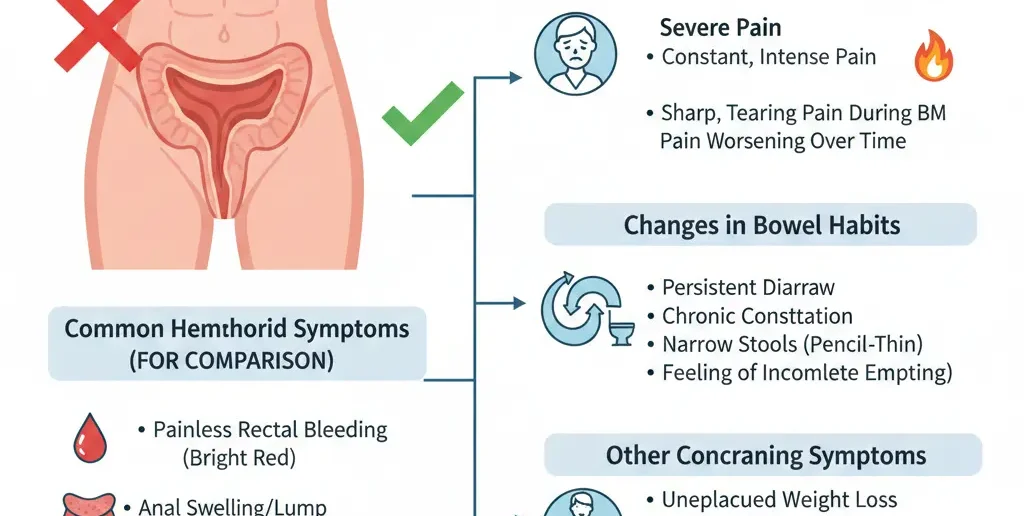
Filename: hemorrhoids-vs-colon-pain.png
Alt text: Diagram showing hemorrhoid location vs colon pain areas
Comparison Infographic
Title: “Hemorrhoids vs Colon Pain: Location and Triggers”
FAQ
Q1. Can hemorrhoids cause pain inside the colon?
No. Hemorrhoids form near the rectum, not in the colon.
Q2. Why does hemorrhoid pain feel internal?
Pressure and muscle tension can create referred discomfort.
Q3. Is bleeding always from hemorrhoids?
No. Bleeding should be evaluated if persistent or unusual.
Q4. Can constipation cause both hemorrhoids and colon pain?
Yes. Constipation often contributes to both.
Q5. When should I see a doctor?
If bleeding persists, pain worsens, or symptoms don’t improve.
Q6. Can hemorrhoids turn into colon cancer?
No. Hemorrhoids do not increase cancer risk.
Conclusion
Hemorrhoids rarely cause true colon pain, but they frequently mimic it through pressure, straining, and muscle response. Understanding where pain originates and what triggers it helps separate minor rectal issues from deeper colon concerns. Most cases improve with routine changes and stool management. When symptoms persist or don’t fit the typical pattern, professional evaluation provides clarity—not cause for panic.
Internal Links
IBS vs Colon Cancer Symptoms: How to Tell the Difference 2026
EXTERNAL LINK
https://www.mayoclinic.org/diseases-conditions/hemorrhoids/symptoms-causes/syc-20360268