Introduction
During a colonoscopy, a doctor uses a flexible camera to examine the inside of the colon, check for abnormalities, and remove polyps if found. The procedure is usually short, painless due to sedation, and highly effective for prevention.
For many people, the colonoscopy itself feels like a mystery. Preparation gets most of the attention, while the actual procedure is rarely explained in clear, human terms. This uncertainty fuels fear. In reality, colonoscopy is a routine, carefully controlled process. This article walks through exactly what happens before, during, and immediately after a colonoscopy—so there are no surprises.
Why Understanding the Procedure Reduces Anxiety
Fear often comes from the unknown.
When people know:
Who is in the room
What sensations are normal
How long each step takes
Anxiety drops significantly.
From real-world patient feedback, understanding the procedure is often more reassuring than reassurance alone.

SERP Gap: What Most Articles Skip
Many guides say:
“You’ll be sedated and won’t feel anything.”
But they don’t explain:
What sedation actually feels like
What doctors are watching for
What happens if something is found
This article fills those gaps.
Information Gain: Colonoscopy Is an Active, Preventive Exam
Here’s the missing insight:
A colonoscopy isn’t just observation—it’s real-time prevention.
If a polyp is found, it’s often removed immediately, stopping future problems before they start.
Step-by-Step: What Happens During a Colonoscopy
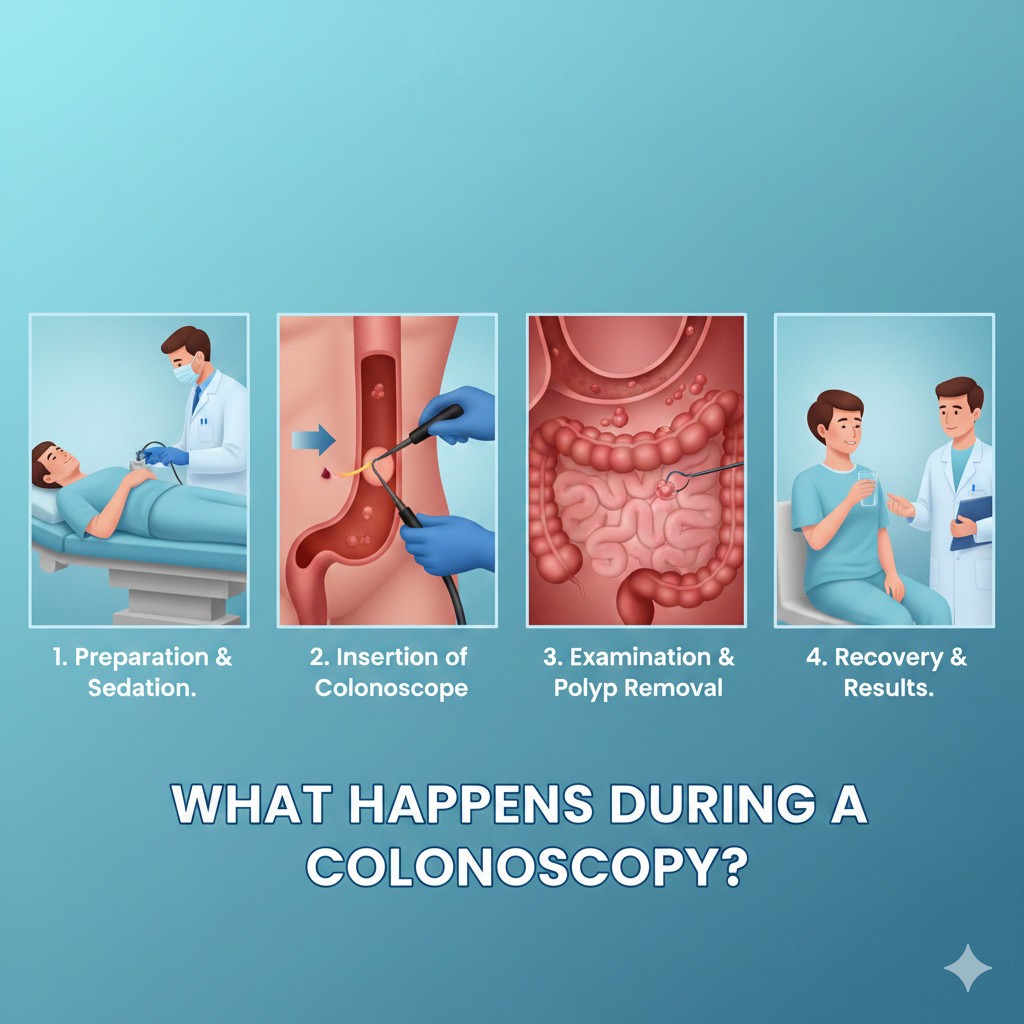
Step: Arrival and Preparation
When you arrive:
Vital signs are checked
Medical history is confirmed
An IV line is placed for sedation
You’ll change into a gown and lie on your side.
Step: Sedation Begins
Most colonoscopies use conscious or deep sedation.
What people typically feel:
Relaxation
Drowsiness
Falling asleep quickly
Many people remember nothing at all after this point.
Step: Insertion of the Colonoscope
The colonoscope is:
Thin
Flexible
Guided gently through the colon
Air or gas is used to open the colon for clear viewing.
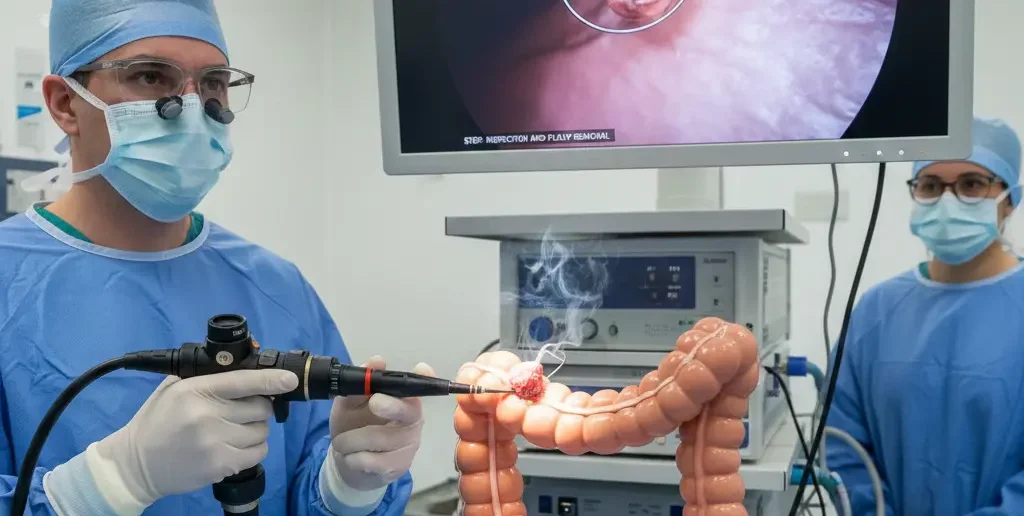
Step: Inspection and Polyp Removal During a Colonoscopy
As the scope advances and withdraws, the doctor looks for:
Polyps
Inflammation
Bleeding
Abnormal tissue
If polyps are found, they are usually removed immediately.
Step: Completion
The scope is removed, sedation is stopped, and the procedure ends.
Typical procedure time: 20–40 minutes
Table: Colonoscopy — What You Feel vs What’s Happening During a Colonoscopy
| What You Feel | What’s Actually Happening |
| Sleepy | Sedation working |
| No pain | Colon lining has few pain nerves |
| Mild bloating later | Air used for visibility |
| Little memory | Sedation effect |
This explains why experiences differ from expectations.
UNIQUE SECTION: Beginner Fear Most People Have
“Will It Hurt?”
This is the most common concern During a Colonoscopy
Reality:
Most people report:
No pain during the procedure
Mild bloating afterward
Quick recovery the same day
Fear comes from imagining pain that rarely occurs.
Common Misunderstandings (and Clarifications)
Mistake 1: Thinking You’re Fully Awake
Fix: Most people sleep through the exam.
Mistake 2: Assuming Findings Mean Cancer
Fix: Most findings are benign or preventable.
Mistake 3: Expecting a Long Recovery
Fix: Normal activities often resume the next day.
[Expert Warning]
You will need someone to drive you home, as sedation affects reflexes and judgment for several hours.
What Doctors Are Looking for During Colonoscopy
Clinicians focus on:
Size and shape of polyps
Location
Subtle flat lesions
Signs of inflammation or bleeding
This careful inspection is what makes colonoscopy so powerful.
[Pro-Tip]
Most important findings occur during scope withdrawal, when inspection is slow and detailed.
FAQ
Q1. Is a colonoscopy painful?
No. Sedation prevents pain in most people.
Q2. How long does the procedure take?
Usually 20–40 minutes.
Q3. Can polyps be removed during the exam?
Yes, often immediately.
Q4. Will I remember the procedure?
Most people remember little or nothing.
Q5. What happens after it’s done?
You recover briefly, then go home the same day.
Q6. When do results come back?
Visual results are often shared the same day.
Conclusion
A colonoscopy is far less intimidating than most people imagine. The procedure is short, controlled, and designed to prevent disease—not just detect it. Knowing what happens step by step replaces fear with understanding. For many, the biggest surprise afterward is how uneventful the experience actually was.
Internal Links
EXTERNAL LINK
https://www.mayoclinic.org/tests-procedures/colonoscopy/about/pac-20393569