Introduction
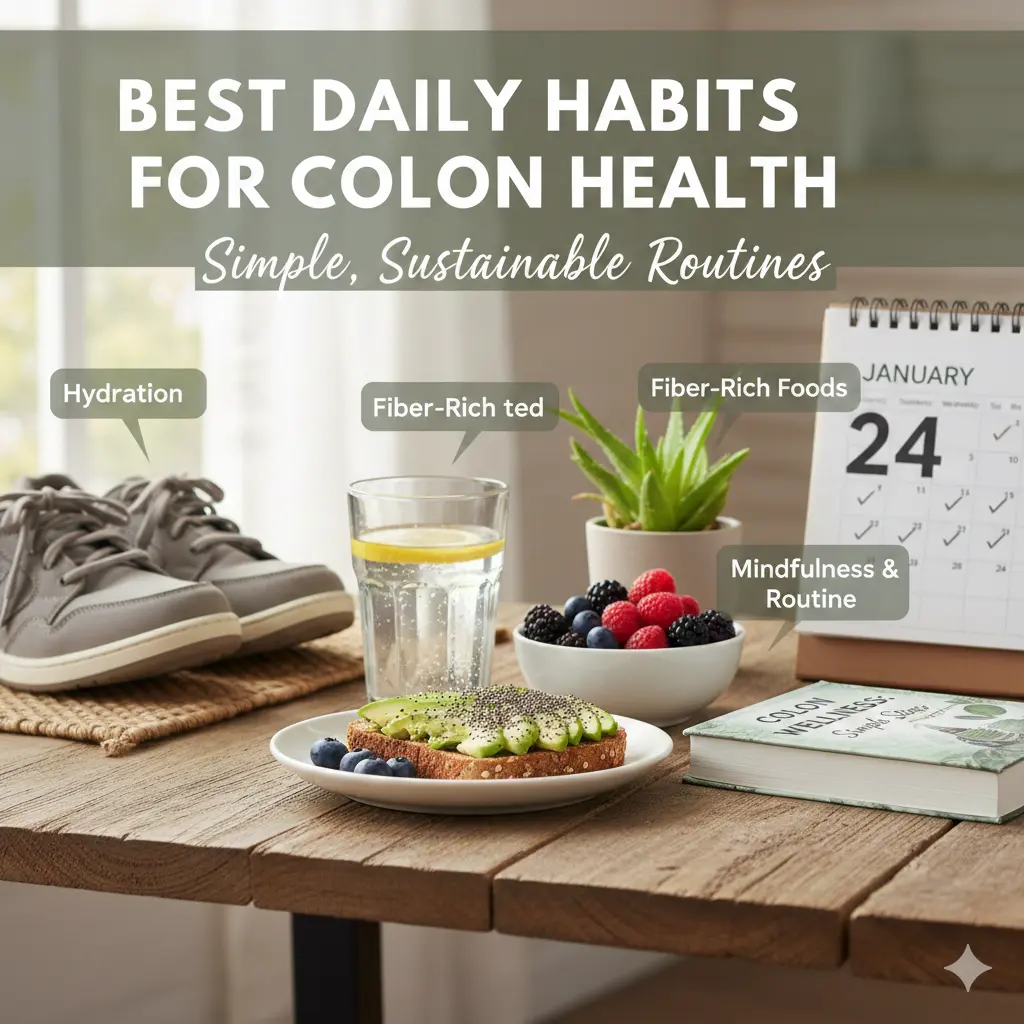
The best daily habits for colon health are consistent meal timing, steady hydration, regular movement, and responding to bowel urges. These habits support natural colon rhythm better than cleanses, supplements, or short-term fixes.
Colon health advice online often feels overwhelming—long food lists, strict rules, and promises of fast results. In reality, the colon responds best to boring consistency, not intensity. What you repeat every day quietly shapes stool movement, comfort, and regularity. This article focuses on daily habits that actually make a difference, explains why they work, highlights common mistakes, and shares practical insights from real-world patterns—not trends.
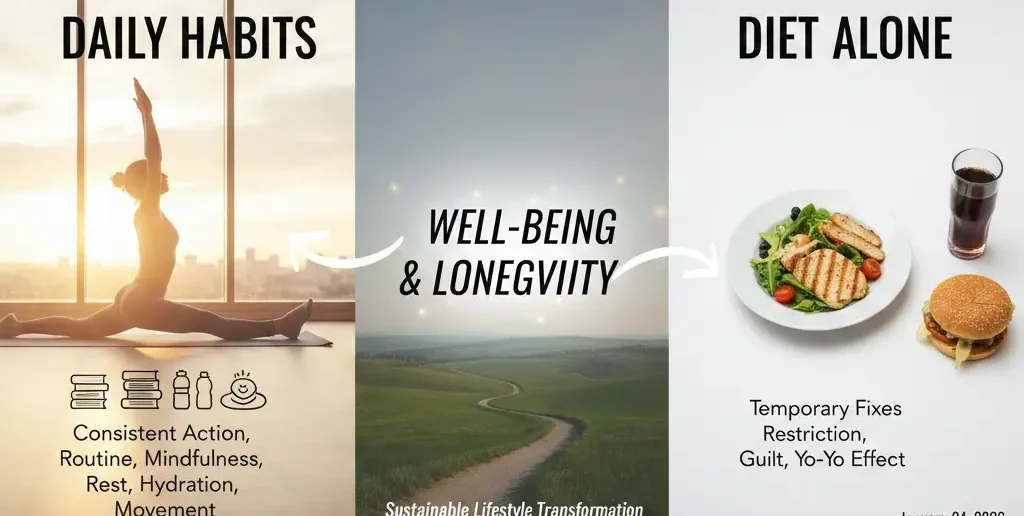
Why Daily Habits Matter More Than Diet Alone
Food matters, but habits control how food moves.
The colon doesn’t react strongly to a single healthy meal or one bad day. It reacts to:
- Repetition
- Timing
- Routine stability
From practical observation, people who eat “well” but live irregularly often struggle more than those with average diets and consistent habits.
SERP Gap: What Most Habit Lists Get Wrong
Most articles list habits without explaining:
- Why they help the colon
- How to apply them realistically
- Which habits matter most when time is limited
This leads to frustration and overcorrection.
Information Gain: Colon Health Is About Rhythm, Not Perfection
Here’s the missing insight:
The colon works best when daily signals arrive in a predictable order.
When meals, movement, hydration, and rest follow a loose rhythm, the colon coordinates muscle contractions smoothly—making bowel movements easier and more comfortable.
The Best Daily Habits for Colon Health (Ranked by Impact)
Eat Meals at Consistent Times
Meal timing is one of the strongest colon signals.
Why it works
- Eating activates the gastrocolic reflex
- Regular timing trains predictable bowel urges
Real-world example:
People who skip breakfast or eat randomly often report irregular urges, even with good diets.
Drink Water Throughout the Day (Not All at Once)
The colon absorbs water from stool. If hydration is inconsistent:
- Stool dries
- Movement slows
- Discomfort increases
Better habit
- Small amounts, regularly
- More earlier in the day
Move Your Body Every Day (Light Counts)
Movement stimulates intestinal contractions.
You don’t need workouts.
From real usage patterns, these work well:
- Walking after meals
- Standing breaks
- Gentle stretching
Respond to Bowel Urges Promptly
Ignoring urges weakens the colon-brain signal.
Over time, this can cause:
- Constipation
- Incomplete emptying
- Unpredictable patterns
Maintain a Predictable Sleep Schedule
Sleep regulates the nervous system, which controls colon movement.
Irregular sleep often shows up as:
- Sluggish mornings
- Irregular bowel timing
- Increased sensitivity
UNIQUE SECTION: Practical Insight From Experience
Why “Healthy” People Still Struggle With Digestion
Many people eat balanced diets yet have poor colon health.
Why?
- Meals at random times
- Long sitting periods
- Ignored urges
- Chronic low-grade stress
In practical situations, fixing timing and movement often helps more than changing food.

Common Mistakes + Fixes
Mistake 1: Focusing Only on Fiber
Fix: Fix timing and hydration first.
Mistake 2: Drinking Most Water at Night
Fix: Front-load hydration earlier.
Mistake 3: Sitting All Day
Fix: Add brief movement breaks.
Mistake 4: Expecting Instant Results
Fix: Give habits 7–14 days.
[Expert Warning]
Daily habits support colon function but do not replace medical care for ongoing pain, bleeding, or unexplained weight loss.
Practical Daily Habit Framework (Easy to Follow)
| Habit Area | Simple Action | Colon Benefit |
| Meals | Eat within set time windows | Predictable urges |
| Hydration | Drink steadily | Softer stool |
| Movement | Walk after meals | Better transit |
| Urges | Don’t delay | Strong signaling |
| Sleep | Consistent schedule | Stable rhythm |
[Pro-Tip]
If digestion improves on weekends or vacations, routine—not food—is the key lever.
FAQ
Q1. What is the most important daily habit for colon health?
Consistency in meals, hydration, and movement.
Q2. Do I need to eat special foods every day?
No. Habits matter more than specific foods.
Q3. Does walking really help digestion?
Yes. Light movement stimulates colon activity.
Q4. How long before habits improve colon health?
Many people notice changes within 1–2 weeks.
Q5. Can stress undo good habits?
Yes. Stress directly affects colon muscle function.
Q6. Are supplements necessary for daily colon health?
Usually not if habits are consistent.
Conclusion
The best daily habits for colon health are not extreme or complicated. They are predictable meals, steady hydration, daily movement, prompt responses to urges, and regular sleep. These habits quietly train the colon to work smoothly over time. When practiced consistently, they reduce discomfort, improve regularity, and support long-term colon health without overthinking.
Internal Links
How to Keep Your Colon Healthy Daily: Simple Routines That Improve Digestion 2026