Introduction
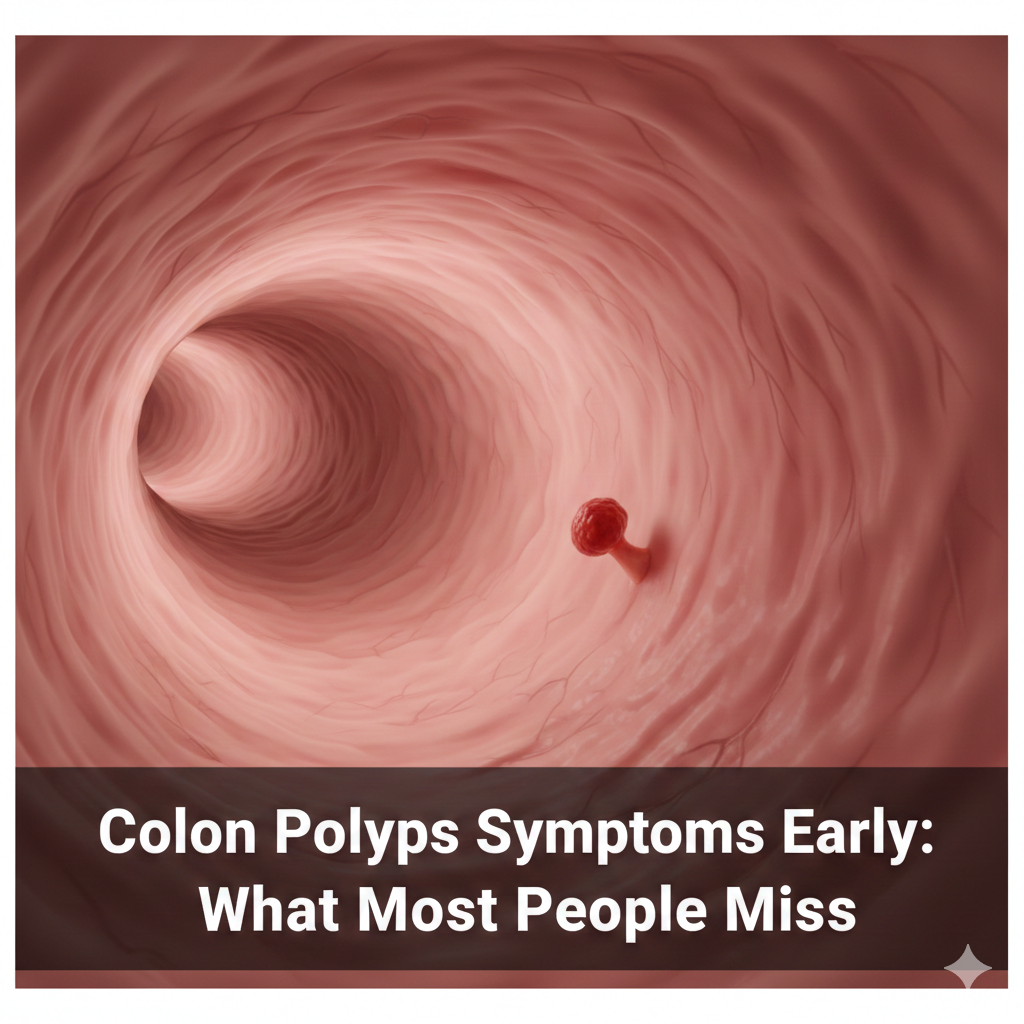
Colon Polyps Symptoms Early: What Most People Miss. Early colon polyps usually do not cause obvious symptoms, which is why they’re often discovered during routine screening rather than because someone feels unwell. When symptoms do appear, they are typically subtle and persistent, not sudden.
Many people expect early colon problems to be painful or dramatic. Colon polyps don’t usually work that way. Most grow quietly, without disrupting daily digestion, which leads to a dangerous misconception: no symptoms means no issue. This article explains what early colon polyps are, why symptoms are often absent, which subtle signs may appear, and how professionals think about risk—without fear-based assumptions.
What Colon Polyps Actually Are (Simple Explanation)
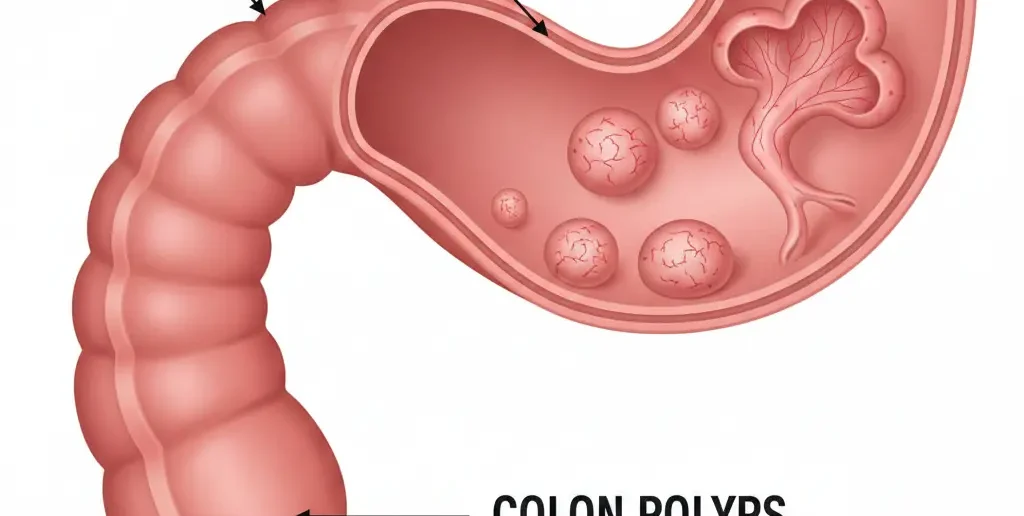
Colon polyps are small growths on the inner lining of the colon.
They can vary in:
Size
Shape
Growth speed
Most polyps are benign, but some types can slowly develop into cancer over many years if not detected and removed.
Key point
Polyps affect the lining, not the muscle or nerves—this explains why pain is uncommon early.
SERP Gap: What Most Articles Fail to Clarify
https://youtu.be/KH7eGiiSxEU
Most pages say:
“Colon polyps often have no symptoms.”
What they don’t explain is:
Why symptoms are absent
Which signs might still appear early
How people usually discover polyps
This lack of explanation causes confusion and false reassurance.
Information Gain: Silence Is the Defining Feature of Early Polyps
Here’s the critical insight missing from many top results:
Early colon polyps are silent because they don’t block stool flow or irritate nerves.
Symptoms usually appear only when:
Polyps grow larger
They bleed slowly
They alter bowel movement mechanics
That’s why screening—not symptom-watching—is the primary detection method.
Possible Early Colon Polyps Symptoms (When They Do Appear)
While many people have no symptoms, some may notice:
Subtle Rectal Bleeding
Often small amounts
May appear as blood streaks on stool
Can be mistaken for hemorrhoids
Gradual Change in Bowel Habits
Slight constipation or looseness
Change that doesn’t resolve over weeks
Iron-Deficiency Fatigue (Rare but Important)
Slow bleeding from polyps can, over time, contribute to fatigue—often without visible blood.
In practical situations, fatigue alone is rarely linked to polyps, but fatigue plus bowel changes raises attention.
Table: Early Polyps vs Other Common Causes
| Symptom |
Early Polyps |
IBS |
Hemorrhoids |
| Pain |
Rare |
Common |
Localized |
| Bleeding |
Possible, subtle |
No |
Bright red |
| Habit change |
Gradual |
Fluctuating |
No |
| Night symptoms |
Rare |
Rare |
No |
| Found by screening |
Common |
No |
No |
This comparison highlights why polyps are often missed without screening.
UNIQUE SECTION: Practical Insight From Experience
Why People Assume Polyps Would Hurt
Many assume growths inside the body must cause pain. In reality, the colon lining has few pain receptors.
In real-world screening programs, the most common reaction after polyp removal is:
“I had no idea anything was there.”
That surprise is normal—and dangerous if it delays screening.
Common Mistakes People Make (and Fixes)
Mistake 1: Waiting for Symptoms Before Screening
Fix: Follow age- and risk-based screening guidelines.
Mistake 2: Assuming Bleeding Is Always Hemorrhoids
Fix: Note persistence and recurrence.
Mistake 3: Ignoring Gradual Changes
Fix: Track bowel patterns over time, not days.
[Expert Warning]
Rectal bleeding that repeats, persists, or occurs with fatigue or weight loss should always be evaluated—even if pain is absent.
How Colon Polyps Are Usually Found
Most polyps are discovered through:
Colonoscopy
Stool-based screening tests
They are often removed before they cause problems, which is why screening is so effective.
[Pro-Tip]
Lack of symptoms is not reassurance when it comes to colon polyps—screening history matters more than how you feel.
FAQ:
Q1. Do colon polyps cause pain early?
Usually no. Most early polyps are painless.
Q2. Can you feel colon polyps?
No. They typically cause no sensation.
Q3. Is bleeding always a sign of polyps?
No, but repeated bleeding should be checked.
Q4. Do all polyps turn into cancer?
No. Only certain types carry risk over time.
Q5. How are polyps usually found?
Through screening tests, not symptoms.
Q6. When should screening start?
Based on age, family history, and risk factors.
Conclusion:
Early colon polyps are dangerous not because they cause symptoms, but because they usually don’t. Their silence is what makes routine screening so important. While subtle signs like repeated bleeding or gradual bowel changes can appear, most polyps are found only through proactive testing. Understanding this reality replaces false reassurance with informed action—without unnecessary fear.
Internal Links
Can Hemorrhoids Cause Colon Pain? Facts Explained - ColonDaily | Your Daily Guide to Colon Health & Wellness
EXTERANL LINK
https://www.mayoclinic.org/diseases-conditions/colon-polyps/symptoms-causes/syc-20352875?utm_source